
Can I Still Pursue a Claim if I Wasn’t Wearing a Helmet During my Motorcycle Accident?
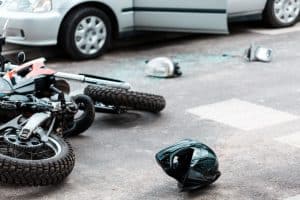 It is no secret that California enforces a strict, universal motorcycle helmet law. However, accidents happen in a split second, and sometimes riders find themselves involved in a collision while not wearing a helmet—whether they were riding just a few blocks from home or operating a vintage bike.
If you were injured in an accident caused by a negligent automobile driver while you were unhelmeted, you might assume you have forfeited your right to financial compensation. This is a dangerous misconception. While violating the state’s safety gear mandates introduces legal hurdles, it does not bar you from pursuing damages. Here is an in-depth breakdown of how California law treats unhelmeted riders in personal injury claims.
The Baseline: California’s Universal Helmet Mandate
To understand how an unhelmeted accident impacts a civil lawsuit, you must first look at the traffic safety law.
California Vehicle Code (CVC) § 27803 makes it illegal to operate or ride as a passenger on a motorcycle, motor-driven cycle, or motorized bicycle on public roads without wearing a safety helmet that complies with U.S. Department of Transportation (DOT) standards.
An infraction under this statute carries monetary fines, but its real weight surfaces during a civil personal injury claim through a legal doctrine known as negligence per se. This principle states that if you violate a safety statute designed to prevent a specific type of harm, the court presumes you acted negligently.
Pure Comparative Fault: The Law That Saves Your Claim
Despite the helmet law violation, California operates under a system of pure comparative fault (codified under California Civil Code § 1714). Under this legal framework, an accident victim is entitled to recover damages even if they were partially responsible for the accident or the severity of their own injuries.
Your compensation is simply reduced by your assigned percentage of fault. For example, if a jury determines that you are 30% responsible for your overall injuries because you lacked head protection, you can still recover 70% of your total financial damages from the at-fault driver.
Total Value of Claim: $100,000
Your Assigned Fault:  - $30,000 (30% for lack of helmet)
---------------------------------
Net Recovery Payload:  $70,000
Unlike states with modified comparative fault systems, which bar recovery if you are 50% or 51% at fault, California allows you to recover damages even if you are found to be 99% responsible.
The “Helmet Defense” is Highly Specific to Injuries
Insurance companies will try to use your lack of a helmet to deny your claim entirely. However, California law dictates that failing to wear a helmet can only reduce compensation for injuries that a helmet would have actually prevented or mitigated.
| Injury Sustained | Helmet Defense Impact | Legal / Medical Reality |
|---|---|---|
| Traumatic Brain Injury (TBI) | Yes | Helmet use is highly relevant. Defense experts may argue a DOT-compliant helmet would have reduced or prevented the severity of head trauma. |
| Broken Femur / Leg Fractures | No | Not related to helmet use. The at-fault driver remains fully liable for orthopedic injuries. |
| Severe Road Rash (Torso / Arms) | No | Independent of helmet use and evaluated separately for damages. |
| Spinal / Lumbar Damage | Rarely | Helmets do not protect the spine or lower back; causation arguments are typically limited or inapplicable. |
If a distracted driver turns left directly in front of your motorcycle and you sustain a shattered pelvis, broken arm, and severe soft tissue injuries, your lack of a helmet had zero causal link to those physical traumas. The defense cannot apply a blanket deduction to your entire medical bill profile just because your head was bare.
Proving Causation: The Battle of the Experts
In an unhelmeted motorcycle accident case, the legal battle centers heavily on causation. The at-fault driver’s insurance team carries the burden of proof. They must scientifically prove that your head injuries would have been avoided or less severe had you been wearing a DOT-compliant helmet.
To combat this, your legal team will counter with specialist testimony:
- Biomechanical Engineers: To reconstruct the crash and analyze whether a helmet could have withstood the impact forces.
- Neurologists and Neurosurgeons: To determine whether the trauma resulted from helmet-preventable impact or unavoidable forces.
Immediate Practical Next Steps for the Unhelmeted Rider
- Do Not Discuss Safety Gear with Adjusters: Stick to the facts of the collision and refer questions to your attorney.
- Document All Non-Head Injuries Meticulously: Keep medical records clearly separated by injury type to prevent confusion in your claim.
Riding without a helmet is a traffic infraction, but it does not strip you of your civil right to hold a reckless, distracted driver accountable for upending your life.
Violating California’s universal helmet law can complicate a personal injury claim, but it does not strip you of your right to legal recourse. Because California honors pure comparative fault, an unhelmeted rider can still recover significant compensation for orthopedic, internal, and psychological injuries directly caused by a reckless motorist. Do not let insurance companies intimidate you into accepting a lowball settlement just because you lacked head protection. Speak with a specialized Mission Viejo motorcycle accident attorney.
Legal Disclaimer: The information provided in this article is for general informational purposes only and does not constitute legal advice. Readers should consult a qualified attorney for advice regarding any specific legal matter.
